Fig. 02 — The Full Chart
MarineKPI replaces the spreadsheets, email chains and disconnected checklists fleets use to track PSC, SIRE, RISQ, TMSA and DryBMS audits and statutory compliance — and layers AI on top of every one of them.
— one workflow, reused everywhere
Every audit and inspection module — PSC, SIRE, RISQ, all six TMSA / DryBMS practice audits, ISM, ISPS, MLC — runs through the same lifecycle. Learn it once on any module and you already know all twenty.
🔒 Drafts are private to whoever wrote them — not even an admin sees another user's unfinished report until it's issued.
— unique to MarineKPI
This isn't a bolted-on chatbot. Four focused AI tools sit inside the actual forms your crew already fills in — turning rushed notes into clean, submittable records without leaving the page.
Most of what gets lost in a PSC or SIRE finding isn't the observation — it's an officer translating what they actually saw into English on the fly, under time pressure, in their second or third language. MarineKPI removes that barrier instead of demanding around it: an officer can describe a fire damper fault, a mooring incident or a near miss in Hindi, Tagalog, Mandarin, Russian or whatever mix of languages they think in, and the platform carries the meaning across — not just a word-for-word translation. The result is that a non-native English speaker's report reads exactly as clear and rigorous as anyone else's, and nothing gets softened, mistranslated or left out because someone wasn't confident writing it up in English.
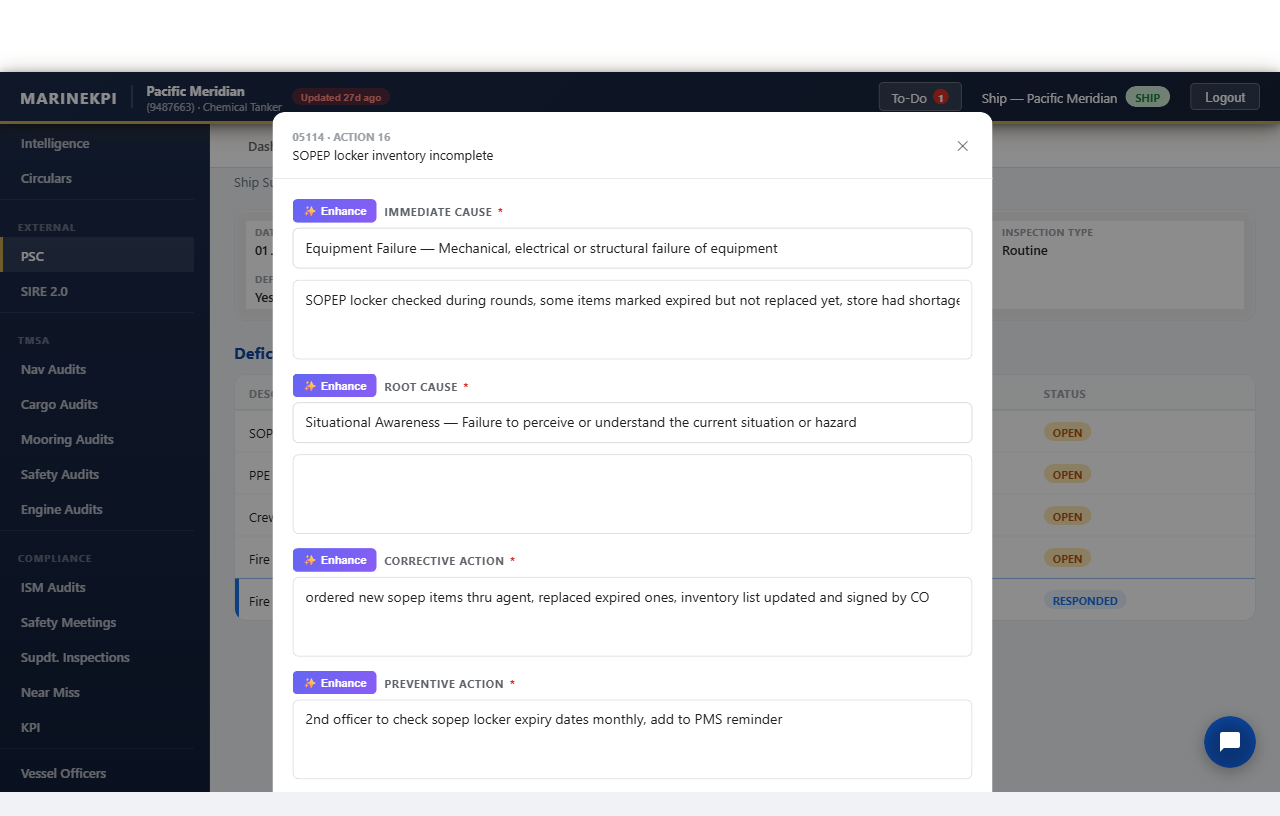
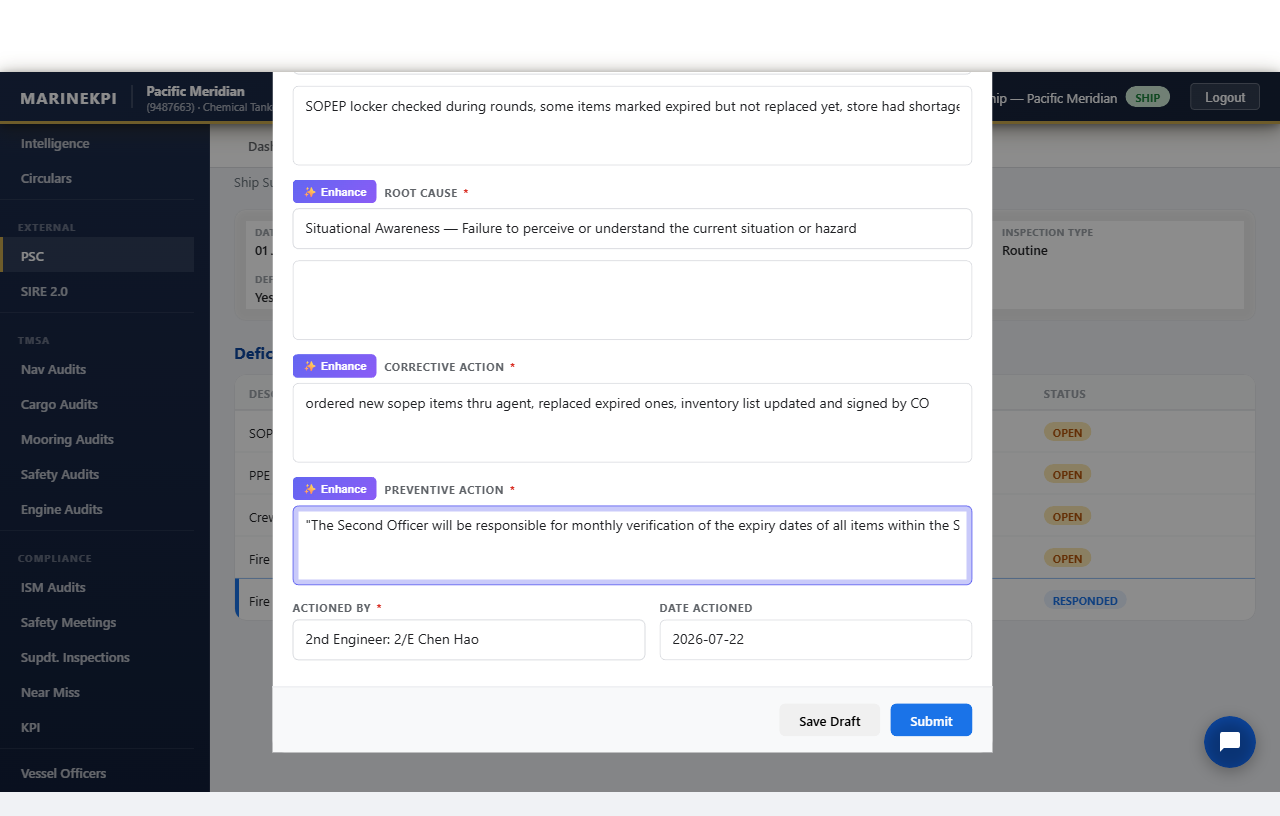
— explore the modules
Start with a category, then drill into the module you care about. Use Back or the breadcrumbs to come out again — everything here mirrors the real app.
— access & security
One login system, three roles, and company data that never crosses tenant boundaries — enforced at the database query, not just the UI.
A 30-minute walkthrough covers the modules that matter to you — PSC and SIRE, TMSA / DryBMS audits, or the Pulse / MRM analytics layer — using your own inspection history if you'd like it loaded in.